

If you sell handmade crafts, party favors, or digital printables, you know the thrill of making a sale. But when you look at your bank account at the end of the month, does it feel like you’re just spinning your wheels? You’re not alone. Many creative entrepreneurs see sales coming in but struggle to feel like they’re earning a real paycheck.
You might know exactly how much a sheet of paper or a blank T-shirt costs, but what about all the other expenses? Your time, packaging supplies, software subscriptions, and marketplace fees can quickly eat away at your revenue, leaving you with far less than you thought.
This is why learning how to calculate the profit margin on your crafts is a game-changer. It’s the simple math that transforms your creative hobby into a sustainable business. Once you know your numbers, you can price your products with confidence, identify your most profitable items, and finally start building the creative empire you’ve been dreaming of.
Beyond the Price Tag: What is Profit Margin in Crafting?
Think of your profit margin as a health check for your creative business. It’s the percentage of revenue you get to keep after all your expenses are paid. It tells you, for every dollar you earn, how many cents are actual profit.
The basic formula is straightforward:
Profit Margin = ((Selling Price – Total Costs) / Selling Price) x 100
For example, if you sell a custom party favor for $20 and your total costs to create and sell it are $12, your calculation looks like this:
(($20 – $12) / $20) x 100 = 40%
Your profit margin on that favor is 40%. The tricky part isn’t the formula—it’s knowing exactly what to include in your “Total Costs.”
The Difference Between Revenue and Profit
It’s easy to mix these two up, but understanding the difference is crucial for any business owner. Let’s break it down simply:
- Revenue is the total amount of money you collect from sales. If you sell 10 sets of party favors for $20 each, your revenue is $200.
- Profit is what’s left after you subtract all your business costs from your revenue. If your costs for those 10 sets were $130, your profit is $70.
High sales numbers can feel exciting, but they can also hide a business that is losing money. Knowing your profit margin gives you the confidence and peace of mind that every sale is truly helping you grow.
Why 2026 Crafters Need Higher Margins
You may have heard old-school advice like, “just double the cost of your supplies.” In today’s creative market, that simple formula is a recipe for business failure. Here’s why a healthy profit margin is more important than ever:
- Rising Costs: The prices for shipping, raw materials, and marketplace fees on platforms like Etsy and Shopify are constantly increasing. A low margin leaves you vulnerable to these changes.
- Hidden Expenses: Your business needs a buffer for marketing costs, software tools like Canva Pro, and website hosting. Profit is what pays for these growth activities.
- Sustainability: For a craft business to be sustainable, it needs to do more than just cover its costs—it needs to pay you! A strong margin ensures you can reinvest in your business and pay yourself a fair wage.
In the handmade and digital products industry, a profit margin of 50-70% is a healthy target. This ensures you have enough left over to cover your time, grow your business, and handle unexpected expenses.
The 5-Step Formula to Calculate Your Craft Profit Margin
Ready to find your numbers? Forget overwhelming spreadsheets. Let’s walk through a simple, step-by-step process you can use for any product you create, whether it’s a physical party favor or a digital template.
Step 1: Calculate Your COGS (Cost of Goods Sold)
COGS includes all the direct material costs that go into creating one finished product. Be as specific as possible and break down costs to the “per-item” level.
This could include:
- Paper, cardstock, or vinyl
- Ink (this is often estimated per page)
- Adhesive, glue, or tape
- Blank products (mugs, shirts, keychains)
- Packaging materials (bags, boxes, ribbon, labels)
For example, if a pack of 25 sheets of glossy paper costs $15, the cost per sheet is $0.60 ($15 / 25). This is the number you’ll use in your calculation.
Step 2: Add Your Labor Rate
This is the most-skipped step, and it’s the one that separates a hobby from a business. Your time has value! You need to pay yourself for the work you do. This includes time spent on:
- Designing or customizing a template
- Communicating with the customer
- Printing, cutting, and assembling
- Packaging and shipping
First, decide on a realistic hourly wage for your work (a common starting point is $20-$25/hour). Then, track how long it takes to complete one product. If your hourly rate is $20 and a project takes 30 minutes to make, your labor cost for that item is $10. Remember, this isn’t a separate fee you charge the customer; it’s a cost you build into your price.
Step 3: Factor in Overhead
Overhead costs are the ongoing expenses of running your business that aren’t tied to a single product. These are the “hidden” costs that are easy to forget.
- Software: Canva Pro, Adobe Creative Cloud, etc.
- Platform Fees: Etsy listing fees, Shopify transaction fees, payment processing fees.
- Marketing: Advertising costs, email marketing services.
- Tools & Equipment: Printer maintenance, cutting machines, new computer.
- Website Costs: Domain registration, hosting.
You don’t need to assign your entire monthly Canva subscription to one sale. A common method is to add up your total monthly overhead and divide it by the number of items you typically sell in a month to get an average overhead cost per item.
Step 4: Determine Your Selling Price
With your costs calculated (COGS + Labor + Overhead), you can now set a smart selling price. While it’s helpful to see what competitors are charging, don’t just copy the lowest price. Your quality, level of customization, and brand experience are unique. Your price should reflect the value you provide, not just what others are doing.
Step 5: Use the Profit Margin Formula
Now, plug everything into the formula:
(Selling Price – Total Cost) / Selling Price x 100 = Your Profit Margin %
Step-by-Step Example: Pricing a Custom Chip Bag
Let’s put this into practice with a popular DIY party favor: a custom chip bag made with a Canva template.
- COGS:
- 1 Sheet of Premium Glossy Paper: $0.60
- Ink Estimate: $0.25
- Adhesive/Glue: $0.15
- Chip Bag/Snack: $1.00
- Total COGS: $2.00
- Labor:
- Time to customize, print, and assemble: 15 minutes
- At a $20/hour rate: $5.00
- Total Labor: $5.00
- Overhead:
- Estimated overhead (fees, software) per item: $1.50
- Total Overhead: $1.50
Total Cost = $2.00 (COGS) + $5.00 (Labor) + $1.50 (Overhead) = $8.50
Now, let’s say you decide to sell this custom chip bag for $15.00.
Profit Margin Calculation:
(($15.00 – $8.50) / $15.00) x 100 = ($6.50 / $15.00) x 100 = 43.3%
A 43.3% margin is a good starting point, but you can see how quickly costs add up. The $6.50 remaining is your true profit—the reward for owning and running the business.
Factoring in the “Hidden” Costs: Digital vs. Physical Crafts
One of the biggest mistakes new crafters make is underestimating the unique costs of their business model. Digital and physical products have very different expense structures.
The True Cost of a Digital Download
Many sellers assume digital products are “free” to sell after they’re created, but that’s a myth. While digital products often have higher profit margins because there are no physical material or shipping costs, they still have significant overhead.
- Software Subscriptions: Your Canva Pro subscription, font licenses, or Adobe Illustrator fees are direct costs of creating your digital products.
- Marketing Time & Spend: Creating Pinterest pins, running social media, and writing blog posts to promote your Editable Canva Party Templates takes time and sometimes money. This is a real business expense.
- Platform Fees: Marketplaces like Etsy and Shopify still charge listing fees, transaction fees, and payment processing fees on every single digital sale. These typically range from 8-15% of your selling price.
Physical Craft Overhead: The Little Things Add Up
For physical products, the small, consumable items are often the ones that drain your profit without you realizing it. Make sure you account for:
- Packaging Costs: This isn’t just the shipping box. It includes decorative fill like crinkle paper, thank-you cards, ribbon, and branded stickers.
- Printer Maintenance: Beyond ink, printers require cleaning and eventual replacement. Factoring in a small amount per print for wear and tear is smart business.
- The “Oops Factor”: What happens when the printer jams, you cut an item incorrectly, or a product is damaged in shipping? Building a small buffer (e.g., 5%) into your costs for mistakes or remakes protects your profit margin.

Maximizing Your Margins: How to Grow Your Creative Business
Calculating your profit margin is the first step. The next is actively working to improve it. Increasing your profit doesn’t always mean cutting costs—it often means increasing the value you provide to your customers.
Increase Perceived Value with Premium Materials
The easiest way to justify a higher price point is to offer a higher-quality product. Using premium supplies instantly elevates the look and feel of your crafts, turning a simple favor into a luxury keepsake. For example, switching from standard paper to a vibrant, sturdy Premium Glossy Cardstock for cake toppers or favor tags allows you to position your product in a higher price bracket, significantly boosting your margin. For more guidance, check out our ultimate guide to choosing paper for party printables.
Optimize Your Process with Templates and Batching
Time is money, so streamlining your creation process directly impacts your bottom line. Using pre-made templates reduces your design time, while “batching”—printing, cutting, and assembling multiples of the same item at once—is far more efficient than making one product from start to finish. The less time you spend per item, the lower your labor cost and the higher your profit.
Upselling and Bundling for Better Margins
Encourage customers to spend more in a single transaction. Instead of selling just one chip bag template, offer a complete “Party in a Box” collection with matching invitations, banners, and water bottle labels. Even with a slight bundle discount, your total profit per order will be much higher because you’re saving on the overhead and marketing costs associated with acquiring a new customer.
When (and How) to Raise Your Prices
Are you constantly sold out but still feel like you’re broke? That’s a major sign your prices are too low. Don’t be afraid to raise your prices to reflect your skill and the value you offer. When you do, communicate it transparently to your loyal customers. Focus on the benefits—better materials, more intricate designs, or faster turnaround—so they understand they are paying for an upgrade in quality, not just a price hike.
For those serious about turning their craft into a career, scaling with education is the ultimate way to speed up profitability. Joining a community like the Party Printable Studio provides you with the templates, tutorials, and business strategies you need to stop guessing and start growing.
Frequently Asked Questions (FAQs)
What is a good profit margin for handmade crafts in 2026?
A healthy target for handmade and digital crafts is between 50% and 70%. This range allows you to cover all your costs, pay yourself a fair wage, and have enough left over to reinvest in growing your business through marketing and new product development.
Should I include my own labor in the profit margin calculation?
Absolutely! Your labor is a real cost of doing business. If you don’t include it, you are essentially working for free. Profit is the reward for taking the risk of owning a business; your labor wage is your compensation for the work you do to create the products.
How do I calculate profit margin for digital Canva templates?
The formula is the same, but your “costs” are different. Your costs for a digital template include your labor (time spent designing and listing), a portion of your software subscriptions (like Canva Pro), and the transaction/listing fees from your selling platform (like Etsy or Shopify).
Does the 50/25/25 rule apply to small craft businesses?
The 50/25/25 rule (50% expenses, 25% owner’s pay, 25% profit) is a general guideline for larger businesses and may not fit a solo craft entrepreneur perfectly. It’s a useful concept, but it’s more important to focus on achieving a healthy overall profit margin (50%+) and ensuring you are covering all costs, including your own pay.
What is the easiest way to track craft expenses without a degree in accounting?
Start simple! A basic spreadsheet (like Google Sheets) is a great tool. For a more professional setup, Biz Infographs provides high-quality dashboard templates that help you visualize your business finances. Create columns for the date, item purchased, cost, and category (e.g., “Materials,” “Software,” “Shipping Supplies”), and update it weekly. There are also apps like QuickBooks Self-Employed that can simplify the process.
How do I factor in Etsy or Shopify fees when pricing my items?
The best way is to treat them as a percentage-based overhead cost. As of 2026, Etsy and Shopify fees (including listing, transaction, and payment processing) typically total around 10-15% of your item’s selling price. You can add this percentage to your cost calculation to ensure your final price covers these fees.
Article by
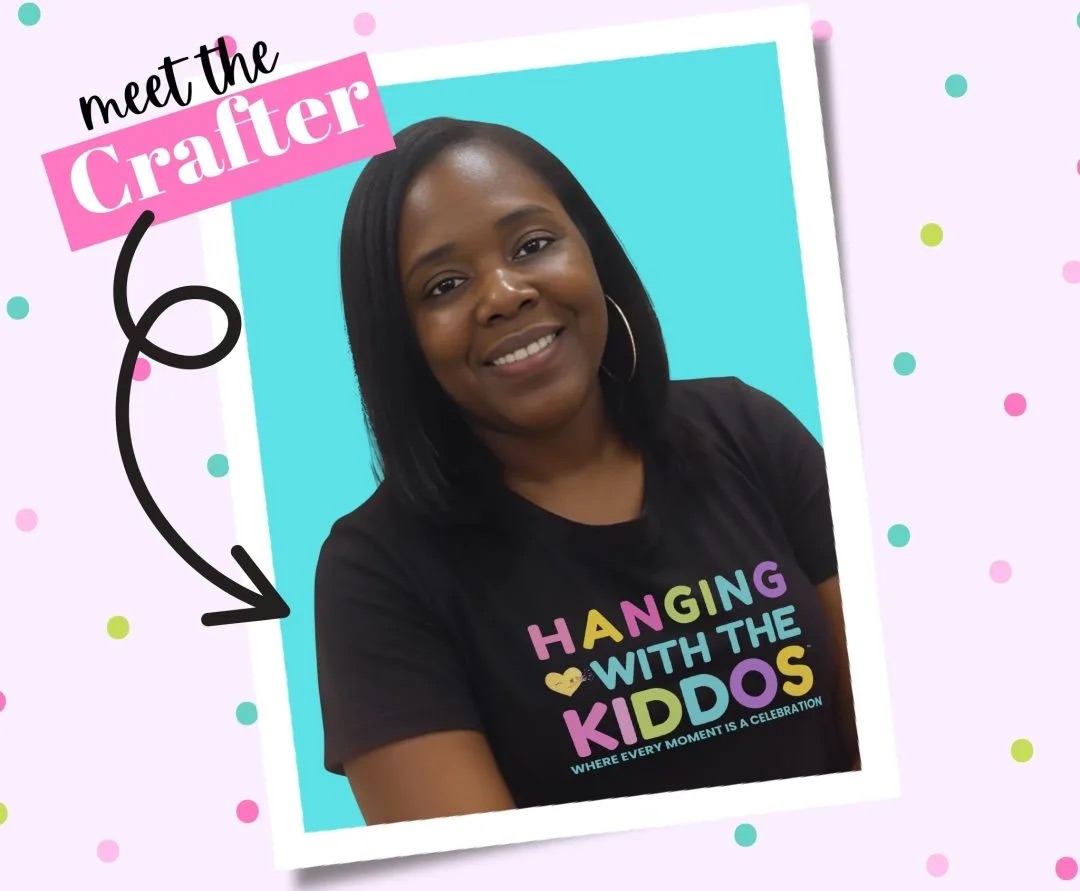
Latoya
Latoya is the founder of Hanging with the Kiddos, where she helps DIY creators design and print professional-quality party favors at home. Through step-by-step tutorials, editable Canva templates, and the Party & Confetti line of premium printing supplies, she shares practical tips that make creating personalized celebrations easier and more enjoyable. Her mission is simple: help families, creators, and small business owners Celebrate • Create • Grow.
Disclaimer
“This post may contain affiliate links, which means if you choose to make a purchase, I may earn a small commission from purchases made at no extra cost to you. Your support is invaluable in helping me continue providing free content on this site & I really appreciate It!”


